Sentim — Audio Emotion Analysis
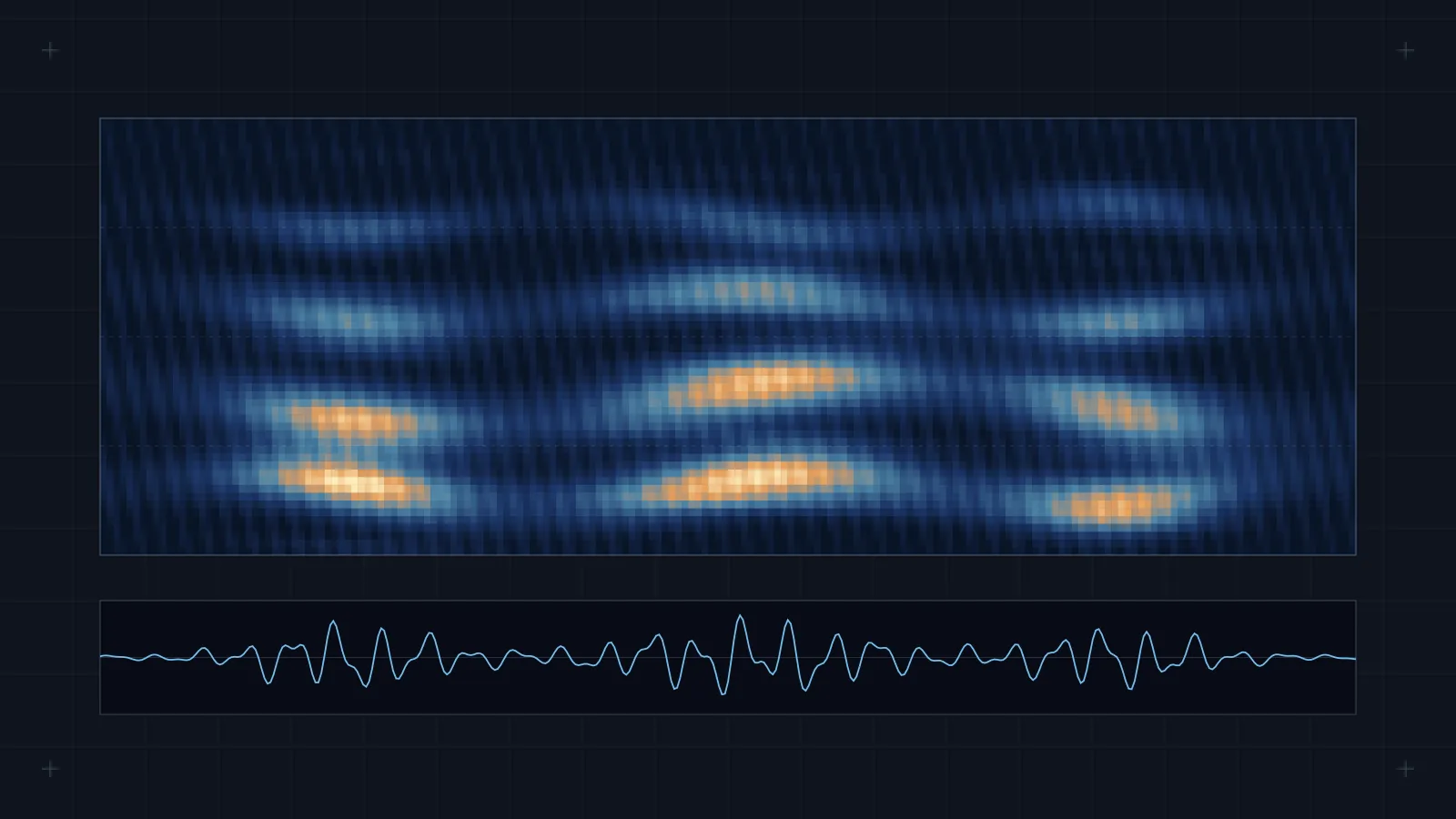
Sound is more than just waves—it’s data.
This project began with a fundamental question: Can we quantify the emotions hidden within audio frequencies? What started as a standard exploration of Digital Signal Processing (DSP) evolved into a a system capable of manipulating audio and "listening" for emotional cues using Machine Learning.
Phase I: The Foundation (Digital Signal Processing)
Originally developed as a capstone assignment for the "Signal Processing" course under Professor Amadou Assoumane, the initial core of this application was a Vocoder. This phase focused on the mathematical manipulation of audio signals in the time and frequency domains.
Some key DSP functionalities included:
- Time-Stretching: Implementing algorithms (such as Phase Vocoder) to slow down audio playback without distorting the pitch.
- Pitch-Shifting: Altering the key of the audio input while maintaining the original speed.
- Robotization: Applying Ring Modulation effects to create metallic, robotic vocal textures.
Phase II: The Intelligent Layer (Machine Learning)
To bridge the gap between raw signal manipulation and semantic understanding, I integrated an emotion recognition engine. Using the RAVDESS (Ryerson Audio-Visual Database of Emotional Speech and Song) dataset, I built a pipeline to classify emotions such as Joy, Anger, Sadness, and Neutrality.
The system extracts critical acoustic features—specifically MFCCs (Mel-frequency cepstral coefficients) and Spectral Contrast—to feed into a Random Forest Classifier. This model achieved high accuracy, significantly outperforming heuristic baselines and proving that emotional states have quantifiable spectral fingerprints.
Phase III: The Deep Learning Upgrade
The project received its final evolution during the "Deep Learning" course with Professor Giovanni Chierchia. Moving beyond traditional ML, I implemented two distinct Neural Networks to further refine the classification capabilities and explore non-linear feature relationships.
Technical Stack
- Core: Python, NumPy, SciPy
- Audio Processing: Librosa
- Machine Learning: Scikit-learn (Random Forest)
- Deep Learning: PyTorch (Neural Networks)
## Acknowledgments & Credits
This project was developed as part of my studies at ESIEE Paris and bridges multiple disciplines. I would like to express my sincere gratitude to the faculty members whose expertise guided the evolution of this work.
Digital Signal Processing (Phase I)
- Prof. Olivier Français Dean of the Faculty at ESIEE Paris, ESYCOM, UMR 9007 CNRS / Université Gustave Eiffel For his invaluable guidance and expertise in Digital Signal Processing.
- Prof. E. Veronica Belmega Professor in Computer Science and Telecommunication Systems, Université Gustave Eiffel (UGE), CNRS, LIGM For her expert instruction and academic support.
- Prof. Amadou Assoumane For his mentorship and consistent support throughout the initial development.
Deep Learning & AI (Phase II)
- Prof. Giovanni Chierchia Laboratoire d'Informatique Gaspard Monge (LIGM), Université Gustave Eiffel, ESIEE Paris For his guidance during the "Deep Learning" course, which was instrumental in integrating the neural network architectures into this project.